


Advertisements
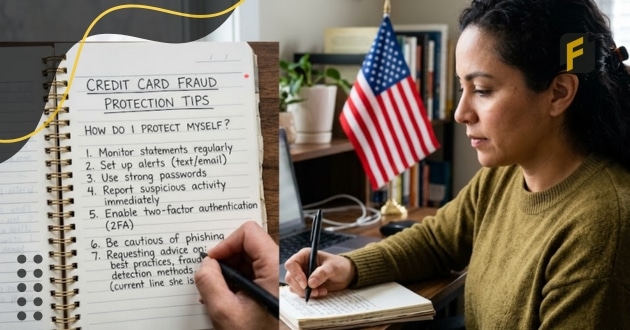
Are you looking for the best credit card fraud protection tips to ensure your assets remain protected against increasingly daring criminals? You’ve come to the right place!
Mastering these credit card fraud protection tips is the first step toward understanding the legal basis that protects American consumers, such as the Fair Credit Billing Act.
Advertisements
In this detailed analysis, we present the main credit card fraud protection tips based on up-to-date market data and the requirements of federal regulatory bodies. By following this guide, you will have a robust action plan to shield your accounts. Reducing your financial liability and ensuring your digital transactions occur with maximum security.
Learn to Detect New Digital Frauds
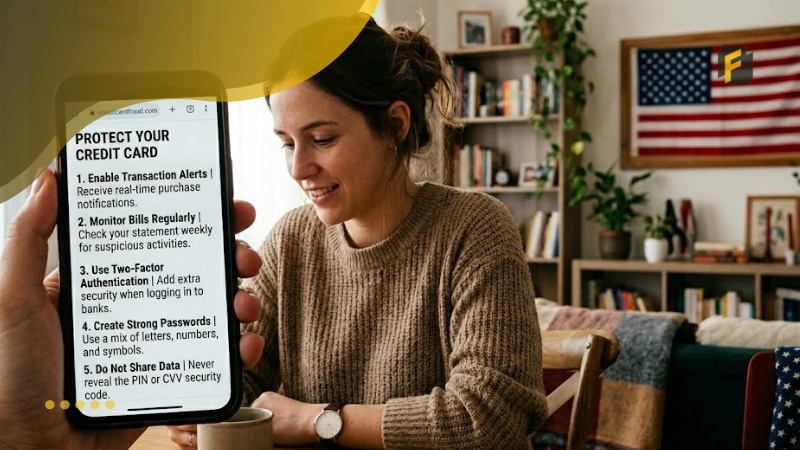
Shimming, which uses ultrafine membranes inserted into chip readers, replaces skimming in the theft of card data, requiring rigorous tactile inspection for detection.
Advertisements
In the digital environment, social engineering is enhanced by AI, using voice cloning and deepfakes to create emergency scams, such as protective transfers. Where the victim voluntarily moves funds to criminals’ accounts.
These sophisticated approaches require a change in security mindset. You should adopt a multi-step verification protocol for unexpected requests and be suspicious of urgent communications.
Furthermore, criminals use social media data to make scams more convincing. Use call filters and never provide verification codes received via SMS.
Fully Shield Your Accounts with These Credit Card Fraud Protection Tips
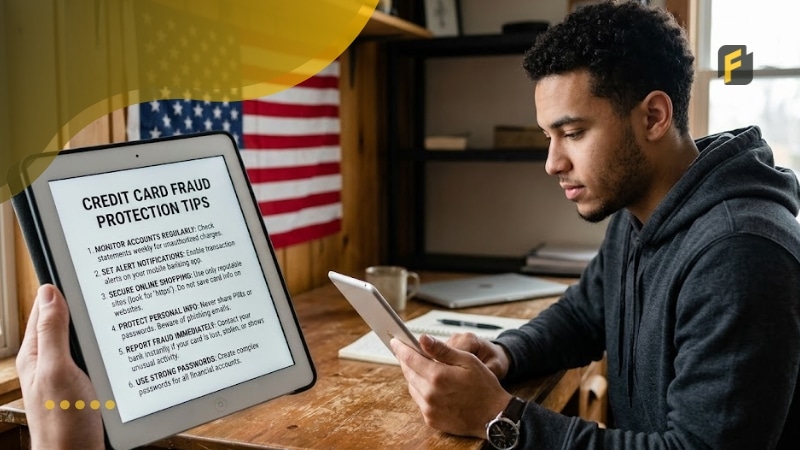
1. Replace Passwords with Physical Security Keys
The use of cryptographic keys, commercially known as passkeys, has become the gold standard for financial security, replacing conventional text-based passwords.
Unlike character sequences that can be guessed by brute-force attacks or stolen in phishing campaigns, passkeys rely on a private key stored physically on the user’s device.
By adopting this technology on consumer platforms and banking institutions, you eliminate the human failure point. Making it impossible for a remote intruder to access your account without physically possessing your smartphone or personal computer.
2. Abandon SMS and Use Authenticator Apps (Credit card fraud protection tips)
Multi-Factor Authentication (MFA), such as the one from Microsoft, is a mandatory measure, but the chosen method determines the level of real protection against intrusions.
Avoid receiving codes via SMS, to escape dangerous SIM swapping attacks. A technique where the criminal assumes total control of your phone number with the carrier.
In fact, the current recommendation focuses on using dedicated authenticator applications or physical security keys that generate temporary codes without any dependence on the mobile phone network.
Moreover, this additional step ensures that, even with a potential leak of your main password, account access remains blocked to third parties. Creating an insurmountable layer of defense against most automated attacks.
3. Ignore Urgent Messages and Avoid Traps
Combating urgency scams requires a systematic posture of distrust towards unsolicited communications from the user.
As a rule, criminals often impersonate government agencies such as the Internal Revenue Service (IRS) or the Federal Trade Commission (FTC) in order to induce panic and rash decision-making.
It is worth noting that if you receive a message alleging immediate account blocks or serious tax irregularities, the correct protocol is to end the contact without providing data.
Use the official number printed on the back of your physical card to confirm the veracity of the information directly with the institution. Ignoring links sent through electronic means that lead to high-fidelity cloned websites.
4. Keep Your Devices Always Updated (Credit card fraud protection tips)
Maintaining the cyber hygiene of all devices is a high-impact passive defensive measure for the security of your financial data.
Frequent updates to operating systems and banking applications correct critical vulnerabilities that are exploited by malicious software to capture payment information in real time.
It is worth noting that activating the automatic update function on all devices ensures you are protected against the latest threats without the need for manual intervention.
Furthermore, outdated browsers are common vectors for viruses known as keyloggers, which record every keystroke. Silently and efficiently exposing card numbers and access passwords.
5. Review Your Statement Every Week
Weekly monitoring of financial transactions allows for the identification of test charges carried out by criminal organizations for the purpose of validating stolen data.
Fraudsters often process tiny amounts, less than a dollar, in order to verify if the card remains active before making a large purchase.
In fact, reviewing the statement through the mobile app helps in the early detection of these anomalies. Allowing for the preventive blocking of the card before financial loss escalates.
This practice of personal vigilance is one of the most effective ways to prevent massive frauds that would compromise your credit limit for prolonged periods.
6. Receive Instant Notifications for Every Purchase (Credit card fraud protection tips)
Setting up real-time alerts transforms your smartphone into an active financial intrusion detection system.
We recommend that you consider that card issuers allow customizing push notifications for any suspicious activity. From purchases in other countries to login attempts on new, unrecognized devices.
Moreover, defining alerts for transactions of any value, even zero cents, guarantees total visibility over every movement of your credit.
This immediate response is essential for mitigating risk. Making it possible to dispute a fraudulent purchase just seconds after it occurs. Facilitating the immediate blocking work by the operator.
7. Pay by Proximity and Hide Your Data
Digital wallets, such as Apple Pay and Google Pay, offer much greater security than using the physical card due to tokenization technology.
When making a proximity payment, the real number of your card is never shared with the merchant’s terminal.
Instead, the system generates a random, single-use code that is only valid for that specific and instant transaction.
If the store’s database suffers an invasion in the future, the captured data will be useless to criminals.
We recommend prioritizing the use of these wallets in physical stores and gas stations to definitively neutralize the risks associated with shimming.
8. Shred Paper and Protect Your Mail (Credit card fraud protection tips)
Although the current focus is predominantly digital, the physical security of documents continues to be a critical point of vulnerability in the United States.
As a rule, the theft of physical mail and the search of trash for bank statements or pre-approved credit offers are common methods aimed at obtaining personal data for identity theft.
Shredding any paper containing financial information before disposal is an essential practice for home security.
Furthermore, avoid carrying your Social Security card in your wallet daily. Limiting physical carriage only to strictly necessary items to reduce the impact of a possible theft.
9. Avoid Public Wi-Fi When Accessing Banks
The use of public Wi-Fi networks to access bank accounts represents a high-security risk that must be avoided at all costs.
It is worth noting that hackers can use traffic interception techniques to read all data transmitted between your device and the bank’s server on open networks.
In situations of force majeure where public Wi-Fi is the only option, a VPN becomes your primary line of defense. By encrypting all traffic, it neutralizes the risks inherent in unsecured connections.
Prefer using your mobile data whenever possible for banking or sensitive tasks. Cellular networks are significantly harder to intercept, providing a much safer environment than shared connections.
10. Examine the Terminal Before Swiping Your Card
Rigorous physical inspection of payment terminals and ATMs before any use must become an instinctive habit of the modern consumer.
Be vigilant for card readers with loose components or inconsistent structures. Such physical defects often indicate that the machine has been compromised by shimmers.
When entering your security PIN, always cover the keypad with your free hand. This simple habit prevents hidden cameras or heat sensors from recording your secret combination.
Moreover, preferring ATMs located inside guarded bank branches instead of isolated machines significantly increases your personal and financial security.
Conclusion
Technology offers the tools, but individual discipline guarantees long-term financial security.
It is recommended to freeze credit at major agencies and be suspicious of pressure tactics are essential for navigating a threat environment. Staying informed about laws and new attacks is a valuable investment.
By following these tips, you will be protecting your assets with a credit freeze today. Financial security requires active prevention, not waiting to be a victim of fraud. The rigorous application of these measures is fundamental to maintaining financial integrity.
Now, there is no point in protecting your account without having financial control. We recommend following the process of managing debt and credit scores.